
Transforming the Adriatic cosmos: insularity, connectivity and glocalized identities of pre-Roman Dalmatia  

HRZZ  UIP-2020-02-2419


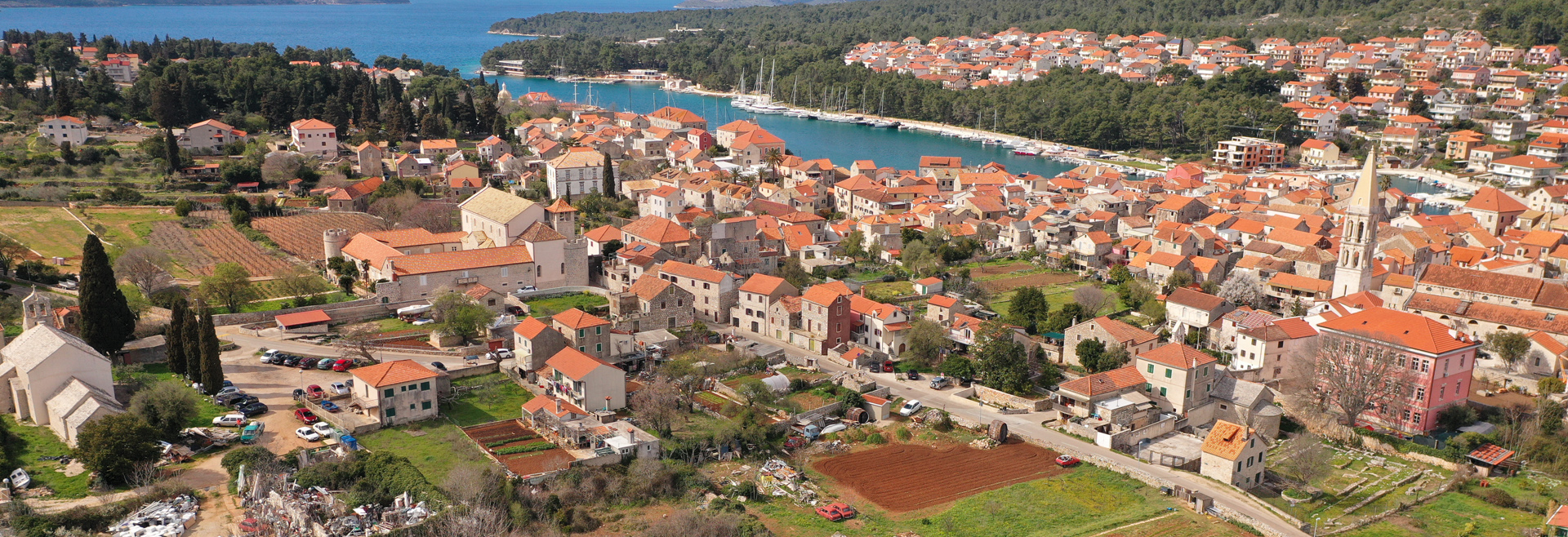
Rethinking the Adriatic as a geographic and cultural space shaped by human agency, the project will break new ground by tracing insularity, connectivity and formation of glocalised identities in pre-Roman Dalmatia (the last Millennium BCE, with a focus on the 4th to the 1st c. BCE). As one of the most thriving periods in this region’s development, its “protohistory”, it is marked by the establishment of Greek island apoikies and their cultural entanglement with local communities. The project aims to scrutinize the culture-historical narrative of Greeks as “superior’’ and locals as “passive’’ recipients in cultural exchanges during this period, taking into account recent theoretical perspectives in archaeology and social anthropology. It is embedded within the general postcolonial approach, and integrates concepts of entanglement and material culture studies’ perspective on the different active roles of material culture during its production and consumption. The focus will be set on the island of Hvar, especially two of its biggest communities, that of colonial Pharos and local Hvar, contrasting them to other insular and continental transforming communities. Important data will be gained through the study of multiple interconnected aspects of material culture and social practice as well as novel and/or state-of-the-art interdisciplinary methodologies. These data will be used to provide a more nuanced interpretation of the specifics of Greek cities in Dalmatia as well as to analyse the various and complex consumption and appropriation patterns at Dalmatian sites and challenge the preexisting culture-historical narratives about the unilateral “spread’’ of Greek influences. In its pursuit of an answer to how cultural templates were selectively adopted and adapted both in “local’’ and “colonial’’ contexts, this project aims to validate the hypothesis that Hvar and Dalmatia were complex cultural melting pots where agency and material culture played different active roles.


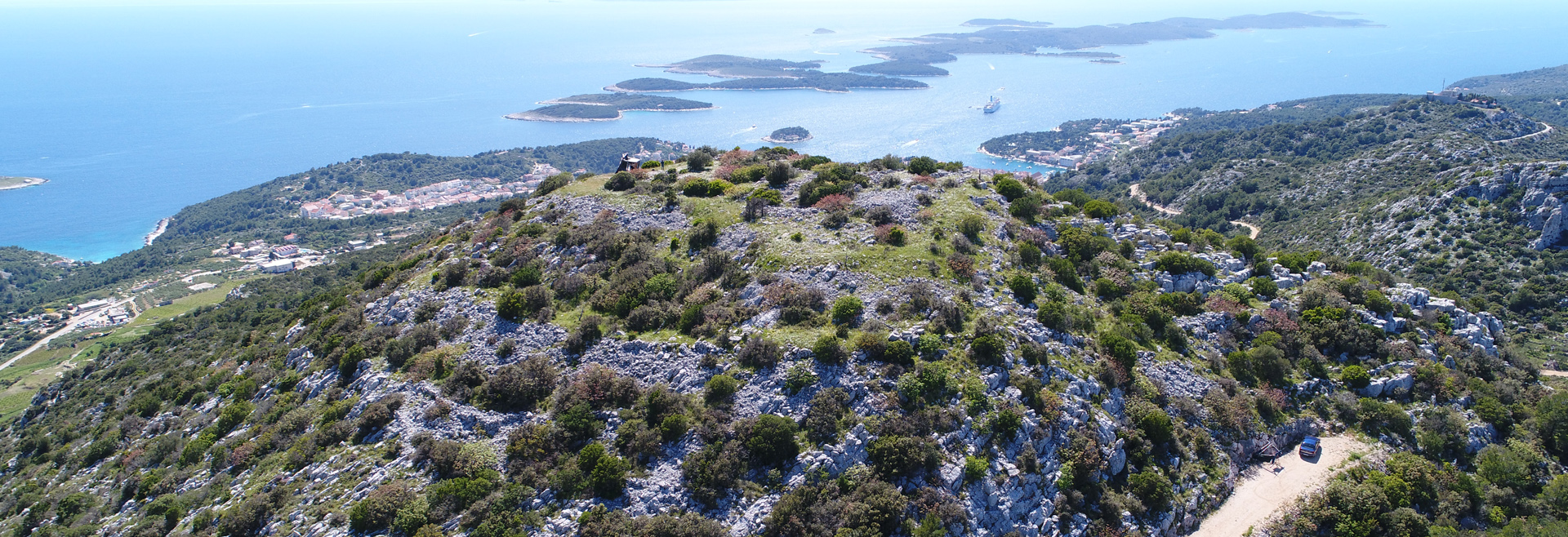
Archaeological excavations of the prehistoric hillfort Gračišće in Starigrad plain


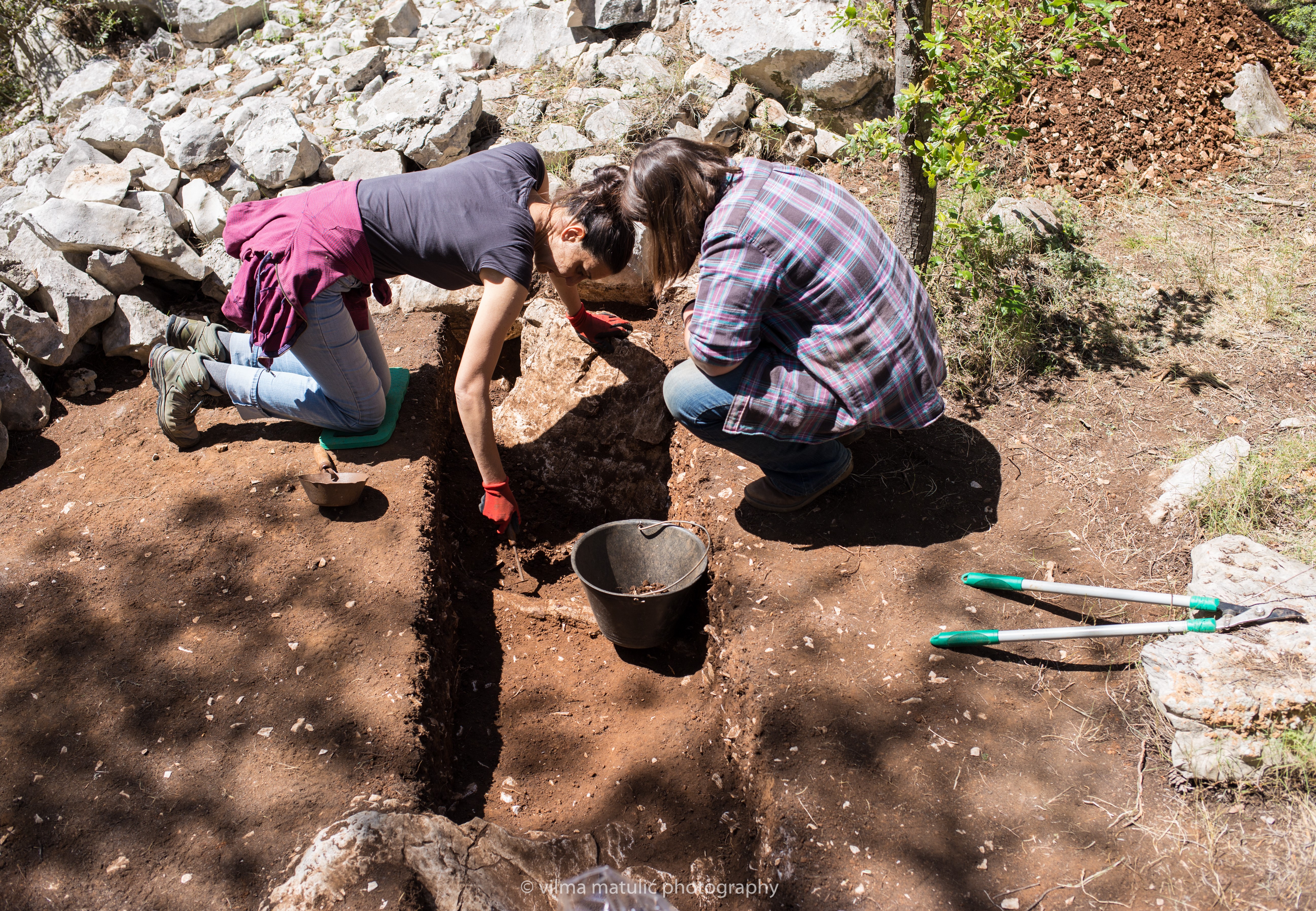
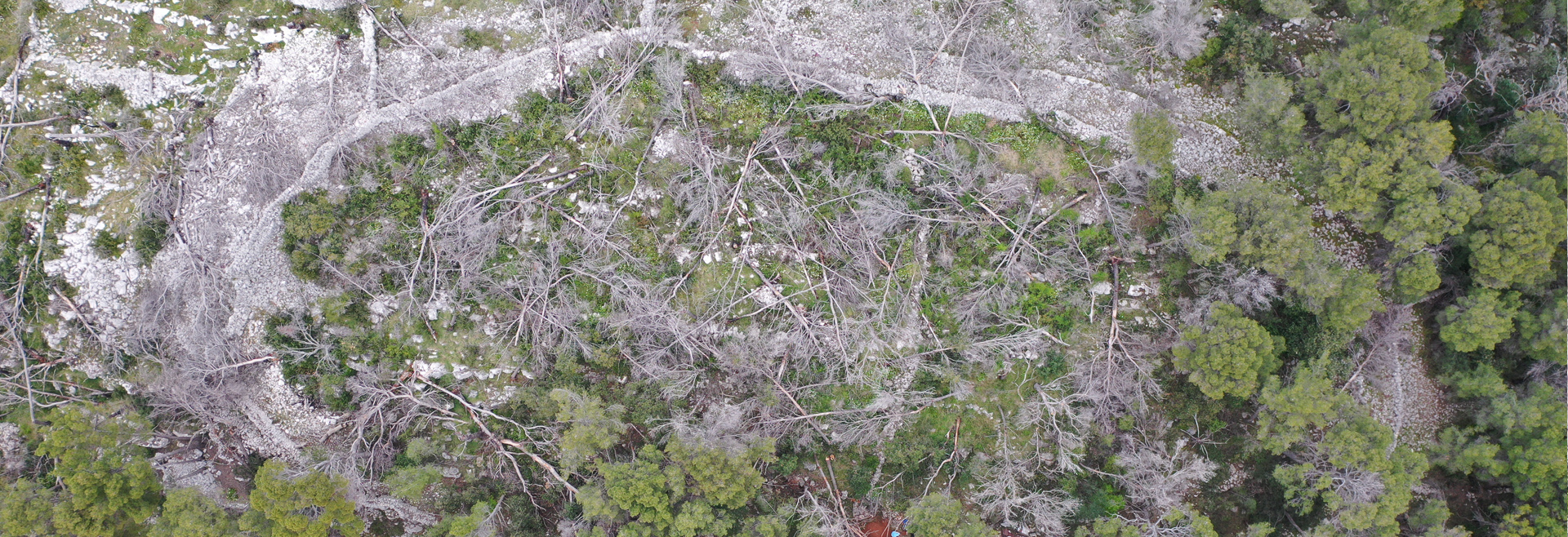
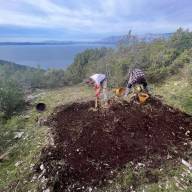
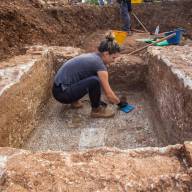
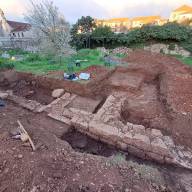
During the second half of April and the beginning of May 2021, the first archaeological excavations were carried out on the prehistoric hillfort Gračišće, which is located in Starigrad plain, between Hvar’s settlements of Vrbanj and Svirče. The research was conducted as a part of the activities of the HRZZ AdriaCos project and in the framework of cooperation between the Institute of Archeology, the Museum of Stari Grad and the Agency for Stari Grad Plain Management – a Public Institution. Along with the project leader, Dr. Marina Ugarković (IARH), Dr. Sara Popović and Andrea Devlahović (MSG) led the field research, with the participation of Antonela Barbir (IARH), and the support of Dr. Aldo Čavić and mr. sc. Vinko Tarbušković. On this occasion, the hillfort was documented from the air with the help of a drone, and two probes along the fortification wall were excavated, during which a part of the prehistoric rampart that lies on the bedrock was discovered, along with fair amount of prehistoric ceramic material and animal bones, whose analysis in ongoing.